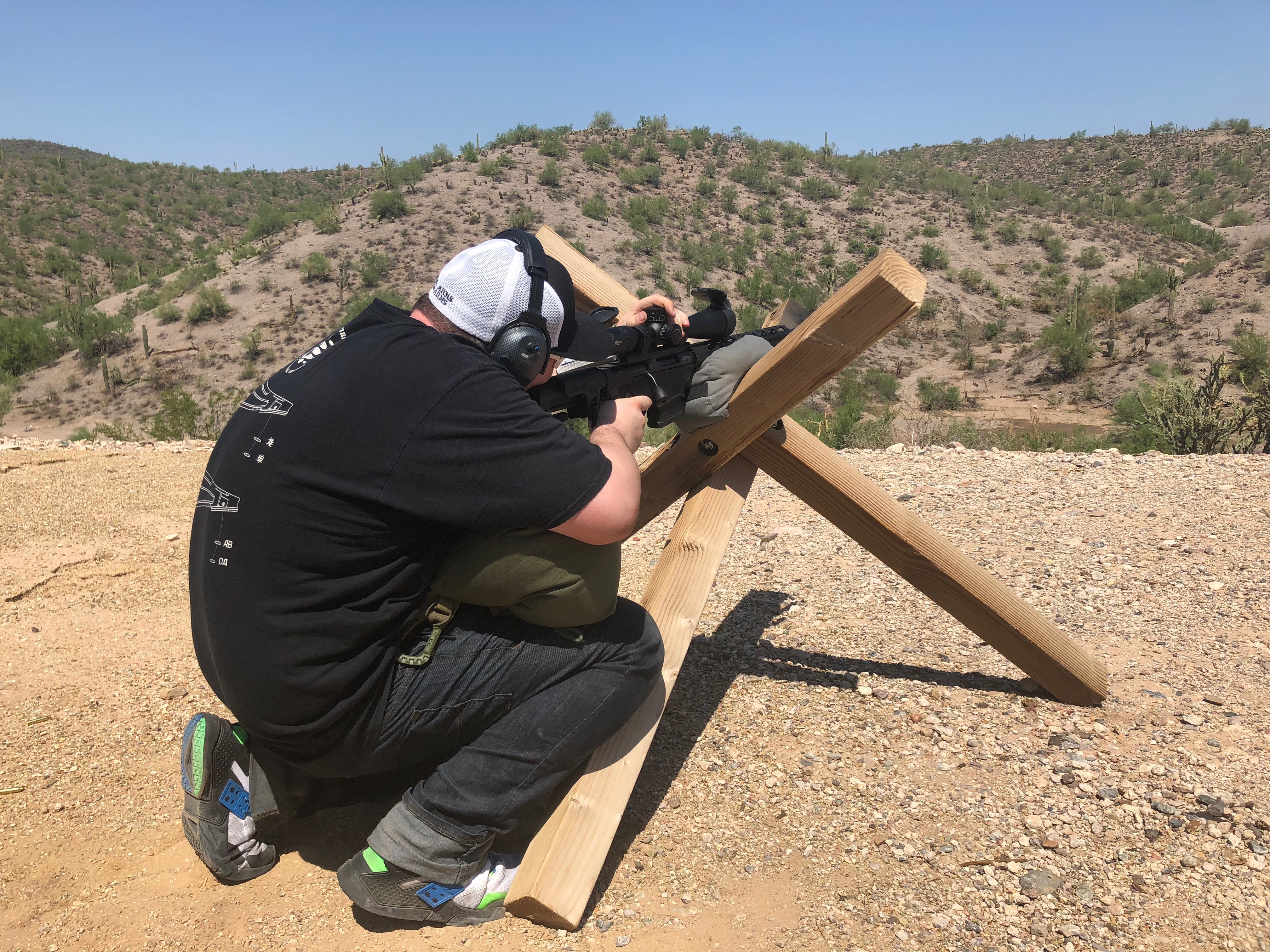
There’s just something about it, looking down that scope at a target the better part of a mile away and trying to get that impact.
Eyes focusing, sweat dripping down your forehead in the unforgiving Arizona sun. DOPE is dialed, wind, accounted for, all that’s left is the ignition sequence, squeezing the trigger until it snaps and the bullet screams out of the barrel beginning its journey to its target.
I’ve always been fascinated by snipers. The first time I heard of the missions of Carlos Hathcock in Vietnam I was hooked. I had to try for myself.
I knew snipers were some bad mother******* but it wasn’t until I really jumped in to learning to shoot long range that I learned just how smart they are. In order to be even a halfway decent long-range shooter (I won’t call myself a sniper, that’s a title earned through military or police service, neither of which apply to me) you have to understand ballistics and the concepts that affect a bullet during flight.
Terms like “Ballistic coefficient,” “Muzzle Velocity,” and the concept of different drag models begin to apply. It’s all a lot to take in at once but, once you dive in, it’s addicting.
After getting through your crash course in ballistics the next, and probably hardest, part is putting all of the theory into practice. You can read every book on ballistics and theory and hear every tip in the book but if you can’t smoothly, calmly squeeze that trigger with good shooting fundamentals, you’re just turning money into noise.
And that is what makes long-range shooting the most amazing form of the shooting sports. It requires a big brain, steady hands and complete control of the moment.
It’s an amalgam of science and art. Ammunition is the paint, the rifle the paintbrush, the target the canvas and you the artist, creating the masterpiece with the pull of the trigger finger.
You have all of your utensils, go out and paint your Mona Lisa.
 Holding The Edge